Wednesday, May 14, 2014

On The Principles Of World Building

Okay time to get back on the wagon people. Even if only for a day.

I love world building. I do it more or less constantly, for self enjoyment. I create and discard settings without a second glance, and am at the point where any really interesting idea I have demands it's own setting. The idea is the painting, the setting is the frame.

Of course, if ideas are paintings, then settings are rather more like galleries, and one hopes the gallery has more then one good picture. It becomes a bit of a game: what do you highlight? Do you feature only original work, or do you take from others? How do you arrange everything. If nothing else, it's a fun metaphor.

Did I mention I REALLY like this analogy?

At any rate, I have realized that my world building has three central tenets. They are Inclusiveness, Contrariness, and Simulationism.

INCLUSIVENESS

Inclusiveness is what I want to include. This usually refers to external ideas, other people's works. For instance, I have yet to make a sci-fi setting without lightsabers. BECAUSE LIGHTSABERS ARE AWESOME.


TOTALLY AWESOME

The ideas I'd like to include can be bigger. For example, I want this setting to be science fiction. It's a label that covers dozens of ideas I'd like to include, such as mega-corps, space travel, other worlds, the far future, ect. Often half the work is taking such grandiose inclusive statements and paring them down.

And the things I can want to include can also be much vaguer. In the current setting I'm working on, I want to include the ability to have Outlaw Star and Firefly style broke episodes. I want the players to have a spaceship, and for each session to be a madcap rush to pay their docking fees, fuel costs, and ship-mortgage. That kind of statement is the opposite of the genre statement, in that rather then be parred down, it needs to be built up. Okay, so I'll need a space fairing civilization, individual ownership of star ships, and someone powerful enough to collect what's owed if the players skip town. As you can see, there's some work ahead here too.

CONTRARINESS

Contrariness is just that: me being contrary. Going against convention. There's two ways to do this. The first is exclusion: what ideas do I not want to include? Well, sentient aliens. I think life is out there all right, but I don't we'll meet it any time soon. Also, I lack the time and skill to make up, completely off of my head, a unique alien biology, sociology, history, technology, and so on. It's just WAAAAAAY to much work. So that's something that's not going to appear in the gallery, if you will.

The second way to be contrary is to twist things. Using the previous example, I don't want separately evolved alien species who just happen to all be on the same technological level as humanity. But I do believe that we'll make great advances in genetic modification in the future. If a regular human were to meet such genetically modified person, they might not even realize they were once the same species! So why not fill the stars with Star Trek aliens: men with funny foreheads. This way I can have my cake and eat it too: there's a bunch of weirdo aliens, but they're all descendant from humans.

Well it explains why they're all humanoids, doesn't it?

As you can see, contrariness is in some ways the art of curation. You wanted to include a bunch of stuff: now some of it we remove, and some of it change around. Once you know what big ideas you want to use, the real work comes.

SIMULATIONISM

Simulationism is having to connect all my fancy pants ideas in some way that makes sense. If there are lightsabers, who has them? Who makes all those starships? If there's a bunch of aliens that are all modified humans, how did that come about? If genes are so malleable as to make all these species, then what's up with planets only having one race apiece? Answering these questions, and filling in all the blanks, is the role of simulationism. I'm just trying to get things to make sense. And occasionally the justifications are so strange or novel that they become original ideas themselves! In this way, idea begets idea, and the best settings, the really strange and weird ones, the ones that make your heart race with possibilities, grow on themselves and get weirder and stranger.

Wednesday, January 8, 2014

Three New Undead

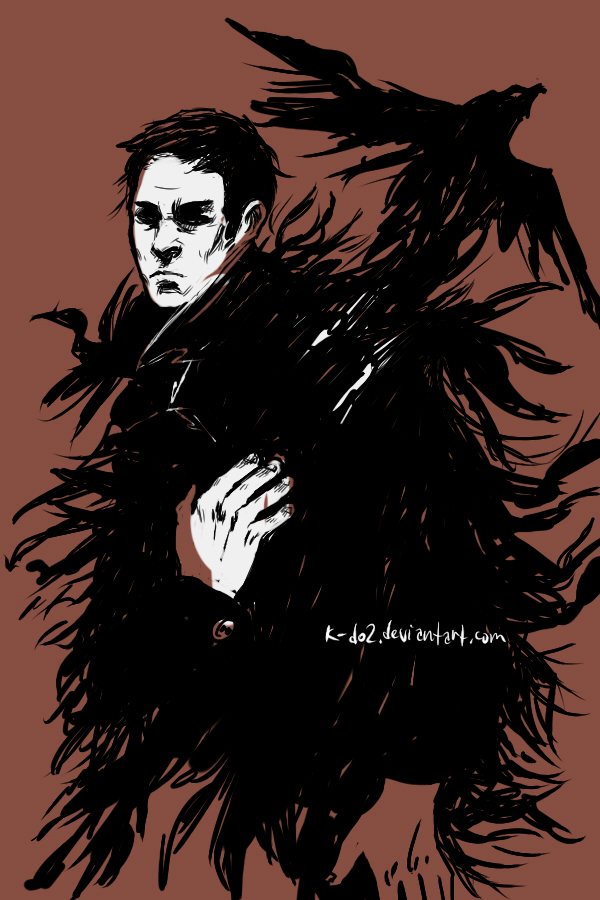
I saw this picture, and suddenly this post happened.

Men can be classified only by their deaths. Monsters, maladies, and the moon all take men to strange graves, but the rest can sleep in honor. Their fates are as follows.

Those who die by beasts are eaten by beasts. Their souls are forfeit to the Forest Queen, who keeps them in the hems of her robes. They drop from her as she takes her walks, growing into trees.

Those who die by sickness are burned, and their remains taken for the Ash Mother's army. In the end days they will ravage the land with flu and flame, leaving it raw and burnt and beautiful, until once again men rise to claim it.

Those who die by drowning are forced to walk the ocean floor. Here they dance with the fishes and the cold, until the Silver Lady finds them in the deep and takes them to her garden on the moon.

All the rest are buried, safe in the earth's granite hands, and soon are born anew. So goes the cycle until they earn another fate or time wears their souls away.


THREE NEW UNDEAD
All of these can be turned by clerics as usual.

DRYADS OF THE HUNT (3HD, AC 15, immune to stabbing weapons)
Those who die from animal attacks are seldom buried. On moonless nights they rip from their graves, their bodies half devoured. These portions of missing flesh are filled in with ebony wood, giving them a spiraling, stripped appearance. From their mad mess of hair emerge antlers, seven crowned, always dripping in blood. These are Dryads.

Dryads speak with the voice of the Forest Queen, a voice which contains the cries of all her souls. Their proclamations deafen listeners with death screams, leaving them unable to hear any save the Forest Queen for five turns. If the Dryad hasn't successfully killed anyone in this time, she will bow, break off a single antler (a man pierced by it will be hounded by wolves for three days), and politely leave. If she has killed someone, she will fly into a rage. The Dryad will bite with wolf teeth (1d6 damage) and gore with antlers (1d8 damage), ceasing neither her assault nor her laughter until every man and beast lies dead in a heap before her. A sure sign of Dryads in the woods is stacks of unburied corpses.

When a Dryad dies her wood will wither, leaving only antlers and the half eaten corpse of a woman.

ASH WRAITHS
Men who die from fever burn up from the inside, and produce Ash Wraiths. They are moaning man-shapes of whirling ash, with red coals glowing where their eyes should be. They leave fire in their wake as they wander the woods. They try to find cottages where they can jump into fireplaces.

Ash Wraiths are dull and stupid things. Being made of Ash, they are immune to damage, though a cold stream or a cauldron of water can put one out. They spit teeth (1d6 damage) surrounded by clouds of ash at any that might obstruct them, but can only do so ten times before using up all their ash and falling apart. Anyone that breathes this ash in will fall deathly sick in 1d6 days, unable to move, their minds in delirium. Those afflicted make a daily DC 20 CON check; failure means the loss of 1 STR, 1 INT, and 2 CON (reaching zero in any stat means death). Passing checks reverses the condition, with rest and medical care giving +4.

When an Ash Wraith dies it leaves nothing but a burnt skeleton.

DROWNED MEN (2 HD, 12 AC)
Drowned sailors roam the bottoms of the oceans, emerging rarely to walk above the waves. They are horrid to look at, bloated grey and white forms that move tirelessly. Their very touch rots flesh and fabric (1d6 damage). They evaporate in moonlight, a painful process that leaves them running for the water.

Drowned Men talk constantly of their sunken treasure troves. Fields of gold coins carpet the abyss, they say, and mountains of rubies wait only for skilled hands to bring them to the surface. They are not lying. Despite their looks, they talk with all the guile 18 CHA provides, and often convince village crowds to follow them into the sea.

When a Drowned Man dies, water pours from his mouth for a week.

Sunday, December 15, 2013

I have posted some but not much.

It occurs to that many of the D&D blogs I follow haven't even updated since I've started this thing. Which on one hand, is cool: since Jeremy Duncan stopped posting I've made nine posts. But on the other hand, it's easy to imagine many of these ancient wyrms stirring again. Jeff Rients has been at this for years before I even started reading blogs, and I bet he'll still be here years after I stop. It's weird, thinking that if I stop today, I may be a rush of mumbled words in between the breaths of a giant.

But hey, at least I was here. I guess in the end that's all you can ask for.

Monday, December 9, 2013

On Crow Vampires


You may have heard of sludge vampires. You may have heard of sewer vampires. But have you heard of crow vampires?

They are terrible creatures.


Crow vampires are made of vampire crows. When a regular crow feeds on the corpse of a man, it becomes vampiric. They look like regular crows, but if they sink their beak into you they will suck your blood, stealing one point of health. Crows have 1d4 HP (plus whatever they stole), and it takes at least three of them to turn into a crow vampire. They do this by flying into each other and combining their hit points, melding into the shape of a man. They only do this if they're hungry.

Crow vampires look like men, but with their arms and legs replaced by black talons. A swipe with them deals 1d8 damage, but their bite is more feared. Crow vampires love to pin you down with their massive strength and then take a good long drink from your jugular, stealing 1d6 health. When you're sucked dry, they turn back into crows and feed on your corpse. 

Crow vampires are immune to damage: they just turn back into crows. So if you shoot a crow vampire with a gun and deal 3 damage, a crow will fly out of the bullet wound. If you swing an axe, deal 6 damage and chop off an arm, the arm will split into two crows and fly away. Then next turn they'll fly right back and reattach.

This means you need to kill crow vampires twice, once as men, and again as crows. Otherwise they'll just keep reforming. Fire is good: if you set the vampire on fire, when it splits into crows they'll be on fire too. Silver is potent, for wounds dealt with silver spawn no crows. If all else fails, find sunlight. Crow vampires can't keep their man shape in direct light, so they'll split up and fly away. This is why attacks only happen at night or on overcast days.

Crow vampires do not have personalities: they're made of crows. They're just a more powerful hunting form. But if a vampiric crow eats the brain of a wizard, it turns red and becomes intelligent. The more of the brain it eats, the more it remembers of its past life.Whenever this red crow is part of a crow vampire, its personality takes over.  It makes for an odd sort of immortality, being a crow vampire wizard, but some wizards claim it's the only way. The most powerful of these are composed of hundreds of crows and can cast terrifying magic. 

Sometimes multiple red crows fuse into a single crow vampire. The less said of these individuals, the better.


Sunday, December 1, 2013

On How Quickly Children Learn

Today I ran a game for my little brother and his friends. These kids were all 13-14, mostly eighth-graders, and only my brother already knew anything about D&D. During college, playing in the dorm's study room, I taught a fair number of new players what all this Strength and Dexterity nonsense was about, but I was a bit anxious about trying to teach four unruly youths at once. I mean hell, half these kids play Skyrim and the other half uses facebook. I need to compete with that.

We were running the Palace of the Silver Princess, mostly because I'm a lazy cur who forgot to prepare anything the night before. This week I should probably read the damn thing, since at the end the party was attacked by some priests and I have no idea who they work for. So, new players, unread adventure, motley collection of house rules. I had no idea how this was going to turn out.

Wednesday, November 27, 2013

Random Dwarf Name Table

Did you know that Jeff Rients wrote a random dwarf name table
Did you know that Gandalf was actually the name of a dwarf in the Norse Edda's? 
Did you know that I like to take things to their ridiculous extremes?

So yeah. Random Dwarf Name Table. Roll d100 twice. If there's a blank, roll again on the first roll column to fill it.

For best results, pair dwarves off, changing only the first letter of their name, like Virfir and Mirfir or Skurin and Durin. Important dwarves are exempt, and may even warrant a last name. 

Or in other words: just copy the Hobbit.

#
First Roll
Second Roll
#
First Roll
Second Roll
01-02
B
-ain
51-52
L
-imir
03-04
B
-an
53-54
M
-innar
05-06
B
-il
55-56
M
-irfir
07-08
B
-in
57-58
N
-ir_ir
09-10
Br
-ith
59-60
N
-ofar
11-12
D
-iur
61-62
N
-ofur
13-14
D
-oin
63-64
N
-ombur
15-16
D
-or
65-66
R
-om_ur
17-18
Dr
-yr
67-68
S
-onar
19-20
Dw
*
69-70
Sk
-orin
21-22
F
-ali
71-72
Sk
-urin
23-24
F
-ari
73-74
Sw
-undin
25-26
Fr
-austri
75-76
T
-un_in
27-28
Fr
-ili
77-78
Th
-yrath
29-30
Fr
-imli
79-80
Th
***
31-32
G
-ithi
81-82
Thr
-andvari
33-34
G
-oni
83-84
Thr
-and_ari
35-36
Gl
-ori
85-86
V
-augspori
37-38
H
-osti
87-88
V
-inskaldi
39-40
H
**
89-90
V
-olgthrasir
41-42
H
-alar
91-92
-
-olg_asir
43-44
H
-alin
93-94
-
-ornbori
45-46
J
-andalf
95-96
-
-orn_ori
47-48
K
-aupnir
97-98
-
-othvitnir
49-50
L
-ifur
99-100
-
-otsognir

*Roll a d20, then d100, then a d20. Combine.
** Roll a d20+20, then d100, then a d20. Combine.
*** Roll 2(d20)+40. Add an -i to the end.

Simple Psionics

The first bit here is the why. If you wanna skip to the good stuff, just scroll till you reach the d12 table. Go on, I won't stop you.

I really love Psychic powers. I really hate how psychic powers are portrayed in D&D. It seems nothing ever passes the Jedi Test, which is simply "Do these rules let me throw stuff around like Yoda?"

Some systems use skill checks. This weirds me out, since that means that sometimes Yoda tries to lift the X-Wing and just... can't. The force is more constant then this. I dislike the mechanic of a boolean can/can't because sometimes my character will roll poorly and I will feel lame.

Some systems use mana, or psi points, or whatever you want to call it. This also weirds me out, since it means Yoda can just run out of juice. Even if you're a mind reader or a pyrokinetic, it's strange to have an arbitrary cap, a limit to how much you can use your powers. Only this many mind readings a day. Psychic powers seem like they should always be on. Mana makes the whole thing feel too much like a rip from magic.

The excellent Scrap Princess posted this. It is fantastic. It is psionics as philosophy, as raw emotional turmoil. But it completely fails the Jedi test.

But it does show me that maybe psionic powers can just be this thing you can do, all the time. Which creates its own set of problems! With no limits, how do I stop someone from just Mind Controlling EVERY ONE THEY MEET. My players would do it too. They like to watch me cry.

Then, I found this, written by the fine Ramanan Sivaranjan. It uses mana points, more or less, but here's the awesome bit: the surge system. You have this power, this awesome thing you can do. But then you can get your psychic nosebleed on and WRECK SOME HAVOC. So without further ado, this is how I run psionics.

On Psionic Powers

Next time you level up, spend that level on learning a psychic power instead. Pick one from the table, or just roll a D12. I don't really care.

All powers take up your standard action. You can only activate one power per turn. Activating a surge power costs 1D4 HP, or whatever your HD is. You start with two powers and gain an additional power every level.

While surging, psykers start bleeding from the nose, and their skin barely but noticeably shrivels as the muscles are eaten away to sustain the caloric needs of their spells.

#
Free Effect: You can do this any time you want.
Surge Effect: You have to pay 1d4 HP to do this.
1
Psionic Immunity: While you concentrate, you can't be targeted by other psychic powers.
Psionic Blocking: While you concentrate, your target cannot use psionic powers.
2
Illusion: You project a mental image into a single target's mind. Unrealistic behavior lets the target make an INT check to realize the illusion is all in their head (thought they still keep seeing it).
Mass Illusion: You project a mental image into the head of everyone within a CHA x 10 feet.
3
Telepathy: You can read minds, and beam your thoughts to others. The target must be within CHA feet of you. With an opposed CHA check (you get +5), you can even pass the thoughts off as being the target's own.
Mind Control: For the next level turns you completely take over a creature's mind, dictating it's actions. Mind controlled characters are easily recognized by their up rolled eyes. When the victim is forced to do something they'd detest (ie; hurt a loved one, give you their wallet) they get a CHA save to snap out of it.
4
Read Memory: By touching a person's head, you can read their memory. Depending on whether they're awake, they experience this as either a flashback or as a dream.
Write Memory: You erase or rewrite a subject's memories, changing an hour of memory for every minute you work. Note: If a subject realizes their memories have been tampered with, they don't get the old ones back. What's gone is gone.
5
Torpor: By slowing the effects of time on yourself, you enter into a state of status, where heat, cold, and your wounds don't affect you. You remain conscious and can awake at any time.
Paralysis: You slow down a target, freezing them mid-step. To the target, it looks like the world is stuck on fast forward.
6
Haste: By accelerating the effects of time on yourself, you move at double speed. Every turn you can move twice and act twice, but you lose one hit point from the strain.
Time Stop: For your level turns you accelerate time so quickly that everything else is frozen. During this interval you, and only you, can move and act as normal.
7
Dowsing: You can discoverer the location of a person or object, provided you've personally seen or touched that thing before.
Precognition: You can see what will happen in the future to a person or object you've personally seen. Looking into your own future gives you a seizure that stuns you for 1d10 rounds, since it changes just as quickly as you see it.
8
Clairvoyance: By focusing on a place you've been to, you can see it as if you were standing there. Your eyes glow while you do it.
Teleportation: You focus on a place you've been to and instantly appear there. You take everything you are carrying and anyone you touch.
9
Phase Shift: You transpose yourself into a quantum state, and become misaligned with reality. Attacks have a fifty percent chance of going through you entirely.
Bilocation: You transpose yourself into a quantum state, creating a quantum clone. Both of you can take different actions. If one of you takes damage, the waveform collapses: that copy disappears in a puff of quarks and the other copy is "the real you."
10
Telekinesis: You can move up to 10 x CHA x Level pounds. You move it with all the dexterity of a giant baby's hand.
Disintegrate: You rip the object you're using telekinesis on apart. You destroy up to your level of HD instantly.
11
Static Shock:  You become electrically charged. Anyone who hurts you gets a nasty 1d4 damage shock.
Electrokinesis: A huge bolt of lightning erupts from your hands, arcing between your level targets and dealing each d8 damage.
12
Spontaneous Combustion: By rapidly vibrating tiny bits of matter you generate enough heat to set things on fire. 1d6 damage for every turn of flames, but they go out as soon as you stop concentrating (unless you ignited dry leaves or gasoline).
Spontaneous Explosion: You point, it goes boom. 1d12 damage to everything in a ten foot range.